
Stabilization & Mobility Training
Restoring Strength, Control, and Efficient Movement
Stabilization and mobility training are essential components of effective rehabilitation. These approaches focus on improving joint mobility, muscular control, and coordinated movement patterns so the body can move efficiently and tolerate the demands of daily activity, exercise, and sport.
At IC Strength Physical Therapy, rehabilitation is designed to address both mobility limitations and stability deficits, allowing patients to move more comfortably while building strength and resilience.
Rather than simply reducing pain, the goal is to restore proper movement mechanics and improve the body’s ability to handle physical stress.
Why Mobility and Stability Matter
Healthy movement requires the right balance between mobility and stability.
Mobility allows joints to move freely through their intended range of motion.
Stability allows the body to control those movements with strength and coordination.
When either component is impaired, the body may compensate in ways that increase stress on surrounding tissues.
For example:
Limited ankle mobility can contribute to knee pain during squatting or running.
Reduced hip mobility may increase stress on the low back.
Poor core stability may lead to inefficient movement patterns during lifting or athletic activity.
Stabilization and mobility training help address these underlying contributors to pain and movement dysfunction.
Mobility Training
Mobility training focuses on improving joint range of motion and soft tissue flexibility so the body can move more freely and efficiently.
Common mobility goals include improving movement in areas such as:
The hips
The thoracic spine
The shoulders
The ankles
Restricted mobility in these areas can affect how the body performs functional movements such as squatting, reaching, rotating, and lifting.
Mobility exercises may include:
Controlled mobility drills
Active stretching
Movement pattern retraining
Soft tissue techniques when appropriate
Improving mobility allows the body to move through proper ranges of motion while reducing unnecessary strain on surrounding structures.
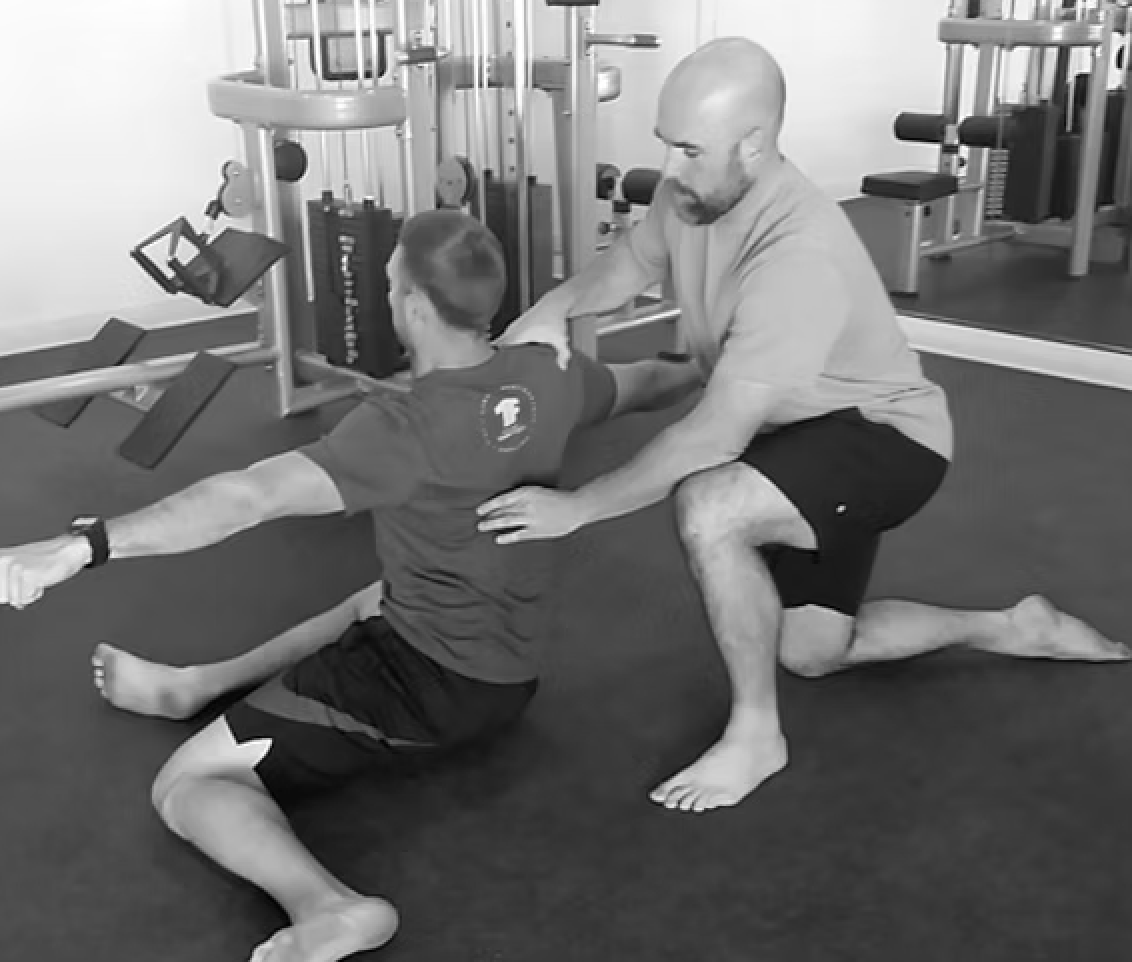
Stabilization Training
Stabilization training focuses on improving the body’s ability to control movement and maintain joint stability during activity.
Stability is not simply about “core strength.” It involves coordinated activation of multiple muscle groups that work together to control movement and protect joints.
Stabilization training may target:
Core and trunk control
Hip and pelvic stability
Shoulder blade control
Balance and neuromuscular coordination
These exercises help improve the body’s ability to absorb force, maintain alignment, and move efficiently during functional tasks.
Improving Movement Patterns
Many injuries occur when movement patterns become inefficient due to weakness, mobility limitations, or previous injury.
During rehabilitation, we evaluate and retrain movements such as:
Squatting
Lunging
Hinging
Reaching
Rotational movements
Walking and running mechanics
Improving these fundamental patterns allows patients to perform everyday tasks, exercise, and athletic activities with greater efficiency and reduced injury risk.